By LAUNCH UK & IRELAND on Jun 23, 2026, 11:00:00 AM
The Core Component: Fuel-Borne Catalysts
The primary active ingredient in professional DPF fluids is the fuel-borne catalyst (FBC), specifically designed to lower soot ignition temperature. Under normal conditions, soot requires approximately 600°C to combust, temperatures usually achieved only during sustained high-speed driving or forced regeneration cycles. Quality DPF fluids contain nano-metal oxide compounds, typically cerium-based (cerium oxide or CeO₂) or advanced metal oxide formulations, that reduce this threshold to 350°C–400°C.
These catalysts work by attaching to soot particles during combustion, creating a catalytic coating that enables oxidation at much lower temperatures. This process allows passive regeneration during normal urban driving, eliminating the need for wasteful regeneration runs and reducing customer inconvenience.
Carrier Systems And Dispersion Technology
Nano-metal oxide catalysts are solid particles that require sophisticated carrier systems for effective fuel distribution. Professional formulations use refined hydrocarbon-based carriers that are fully compatible with modern diesel fuel systems, including biodiesel blends. These carriers must not affect fuel lubricity, cetane rating, or component compatibility while ensuring even catalyst distribution throughout the fuel tank.
Advanced dispersion agents maintain catalyst suspension from tank filling through combustion, preventing settling that would create concentration variations. Poor-quality products often use inadequate dispersion systems, resulting in inconsistent performance and potential system damage.
Detergent Packages For System Cleanliness
Many professional DPF fluids are made of detergent packages, typically based on Polyether Amine (PEA) chemistry, that address fuel system cleanliness upstream of the DPF. By maintaining clean injectors and promoting complete combustion, these detergents reduce soot generation at the source, decreasing DPF loading rates and extending service intervals.
This proactive approach addresses root causes rather than just symptoms, providing superior long-term results compared to catalyst-only formulations.
Compatibility And Protection Additives
Modern DPF fluids include corrosion inhibitors and lubricity agents that protect precision fuel system components from ultra-low sulphur diesel effects. These additives are particularly important for high-pressure common rail systems, where even minor component wear can affect injection patterns and combustion quality.
Water demulsifiers separate moisture from fuel, preventing diesel bug growth and corrosion that can compromise fuel quality and system performance. These protective additives ensure that DPF treatment doesn’t compromise other system components.
Application-Specific Formulations
Professional ranges typically offer two distinct formulation types. Preventative fuel additives are designed for regular use every 3,000–5,000 miles, with lower catalyst concentrations suitable for ongoing maintenance. Remedial direct-inject formulations contain higher active-ingredient concentrations for treating severely blocked filters, often incorporating surfactants and penetrating agents for enhanced cleaning action.
Quality Differentiation
The distinction between professional and consumer-grade DPF fluids lies in catalyst purity, particle size control, and formulation sophistication. Nano-particle catalysts with controlled size distribution provide maximum surface area for catalytic reactions, delivering superior performance at lower dosage rates. Professional products undergo extensive compatibility testing with modern diesel systems, ensuring safety and effectiveness.
Understanding these components helps workshops select appropriate products and explain value to customers, supporting informed service decisions and customer education.
Launch Tech UK provides workshop-focused chemical solutions backed by practical technical understanding. For more information about DPF fluid composition and workshop applications, contact Launch Tech UK Ltd at enquiries@launchtech.co.uk.
FAQ:
-
What is the main active ingredient in DPF fluid? In professional products, the key active component is usually a fuel-borne catalyst designed to reduce soot ignition temperature.
-
Do all DPF fluids contain detergents? Not all do, but many higher-grade formulations include detergents to support cleaner combustion and reduce soot formation upstream.
-
Why should workshops care about DPF fluid composition? Understanding the formulation helps technicians choose the right product, explain value to customers, and reduce the risk of poor treatment outcomes.
How High-Quality ATF Fluids Improve Diagnostic Accuracy
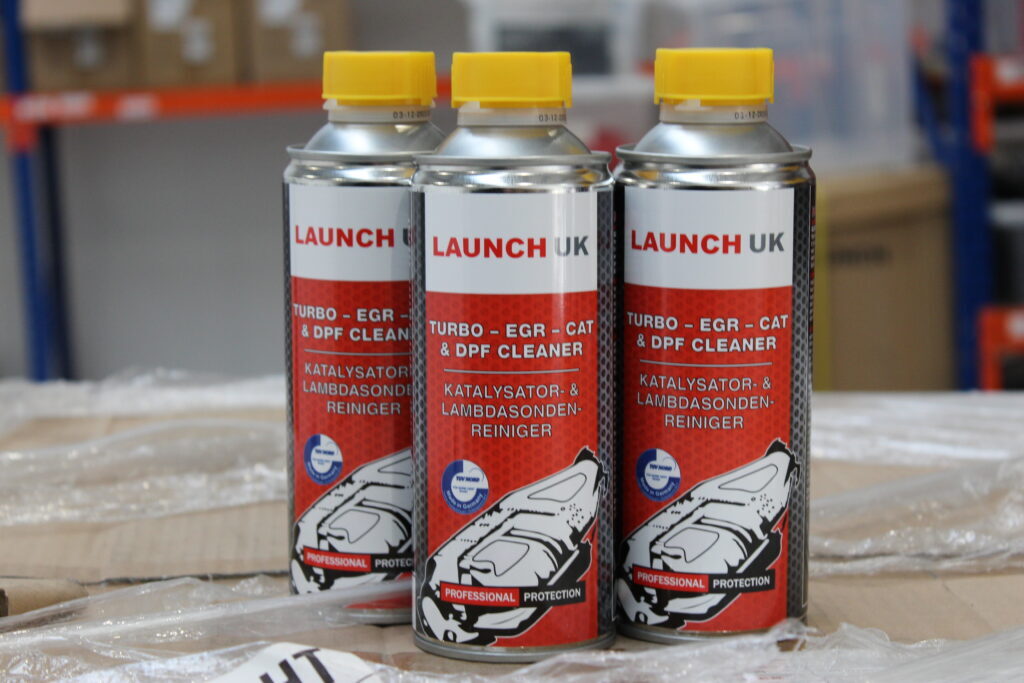
Turbo EGR CAT & DPF Pour-In