Oil Performance Enhancers: A Workshop’s Guide to Using Them Without Overpromising
Oil additives divide opinion because customers expect big results. Workshop reality: modern oils are already heavily formulated, so enhancers only make sense in specific cases. Used selectively, they can be a useful tool; used broadly, they can create variables and complaints.
Oil enhancers generally focus on anti-wear support, viscosity stability, detergency/dispersancy, seal conditioning, and anti-foam behaviour.
Adding chemistry to a balanced oil package can be helpful in narrow scenarios, but it isn’t automatically “better”. The professional approach is selective use, clear documentation, and modest claims — especially where emissions equipment and manufacturer requirements are in play.
Reasonable workshop use cases include:
Avoid blanket recommendations where the vehicle is under warranty with strict manufacturer rules, the engine is healthy on correct-spec oil, or the customer expects it to fix mechanical faults.
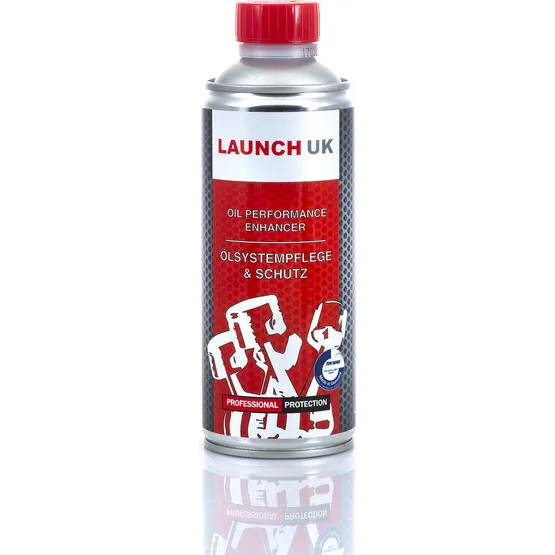
If you want a single, workshop-supplied product to offer as an optional oil conditioner in the right cases, LAUNCH UK & Ireland supplies an Oil Performance Enhancer positioned for that role. The clean way to sell it is symptom support, not universal improvement.
Want to add this as an optional, repeatable workshop service?
LAUNCH UK & Ireland can support workshops with technical fluids, product guidance and trade supply. Contact LAUNCH UK & Ireland at enquiries@launchtech.co.uk for further information.
This article is provided for UK workshop use as general guidance. Always follow the vehicle manufacturer’s service information and fluid specification for the exact model/gearbox/engine variant. Additives and flushing products are not a substitute for diagnosis or mechanical repair where faults are present.