Diesel Particulate Filter (DPF) faults remain some of the most frequent and time-consuming issues faced by UK workshops. Even though modern DPF diagnostic tools improve every year, many garages still struggle to get consistent and reliable results when tackling DPF-related problems. Fault codes that do not reveal the full picture, regenerations that fail halfway through, and inaccurate soot readings are all far too common.
The good news is that most DPF diagnostic tool frustrations are preventable. With the right diagnostic process and the right equipment, technicians can diagnose faults faster, carry out accurate repairs and avoid repeat visits that cost workshops both time and profit.
1. Relying Only on Fault Codes
A major mistake in DPF diagnostics is depending too heavily on fault codes. A code such as "DPF efficiency below threshold" confirms a problem, but it does not explain the underlying cause.
Without checking deeper data, such as:
Exhaust temperature
Differential pressure
Soot load
Regeneration history
…it becomes extremely difficult to identify the real reason behind a DPF fault.
How to fix it:
Use a DPF diagnostic tool that provides full live data and brand-specific DPF parameters. By comparing temperatures and pre and post DPF pressures, technicians can quickly see whether the filter is genuinely blocked or if a sensor fault is preventing regeneration.
2. Forced Regenerations That Fail or Do Not Hold
Forced regenerations that stop halfway through are extremely common. This usually happens when the soot load is already too high or when the vehicle does not meet the correct conditions for a regeneration to begin.
How to fix it:
Before starting a regeneration, check real-time data, including:
Coolant temperature
Fuel level
Exhaust temperatures
Active engine faults
Pressure sensor values
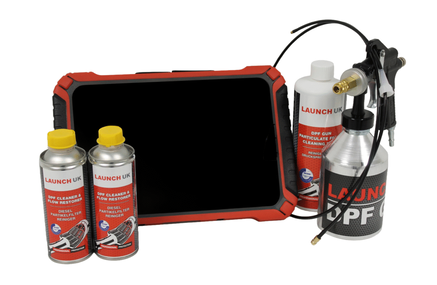
If soot levels are excessive, using a professional DPF cleaning fluid can lower the readings enough for regeneration to complete successfully.
3. Limited or Out-of-Date Diagnostic Coverage
Some diagnostic tools cannot access deeper manufacturer-specific DPF functions. Older or cheaper tools may display basic values but lack essential features such as accurate soot and ash calculations or required resets following DPF cleaning or replacement.
How to fix it:
Use an up-to-date DPF diagnostic tool with OE-level coverage. The LAUNCH X-431 EURO range offers:
Full DPF resets
Manufacturer-specific live data
Guided diagnostic steps
Accurate soot and ash calculations
This prevents misleading readings and repeated DPF faults caused by missing data.
4. Misreading or Misinterpreting Sensor Data
DPF faults are often blamed on the filter itself, but pressure sensors, temperature sensors and even incorrect oil specifications are frequently responsible. Without proper context, data can be easily misinterpreted.
How to fix it:
A capable DPF diagnostic tool allows technicians to compare data side by side, including:
Pre and post DPF pressure
Temperature behaviour during regeneration
Historical fault information
This makes it easier to diagnose faults based on patterns rather than isolated figures.
5. Tackling Symptoms Instead of the Real Cause
Clearing fault codes or forcing a quick regeneration might turn the warning light off for now, but if soot accumulation, faulty sensors or oil contamination remain unresolved, the DPF fault will return.
How to fix it:
Use a reliable DPF diagnostic tool alongside the correct physical processes. Professional DPF cleaning chemicals combined with guided diagnostic steps ensure the underlying issue is fixed rather than masked.

Conclusion: Smarter Diagnostics Lead to Cleaner Repairs
At LAUNCH UK & IRL, we see the same recurring issues across thousands of workshops, and we also see how easily they can be resolved with the proper approach. Below are the most common problems and how to overcome them.
DPF diagnostics do not need to be complicated. With the right DPF diagnostic tool, accurate data interpretation and support products such as DPF cleaning chemicals, UK workshops can deliver faster, more reliable and more profitable repairs.
At LAUNCH UK & IRL, our goal is to equip workshops with the tools and expertise required to manage even the most challenging DPF issues, improving accuracy and customer satisfaction.
Ready to upgrade your workshop’s DPF diagnostic accuracy?
If you want a DPF diagnostic tool that provides full manufacturer-specific data, accurate soot and ash readings and reliable guided DPF procedures, the LAUNCH X-431 diagnostic range is designed to give your workshop the confidence and coverage it needs. You can contact LAUNCH UK & IRELAND at sales@launchtech.co.uk or call 01752 968343 for further information.